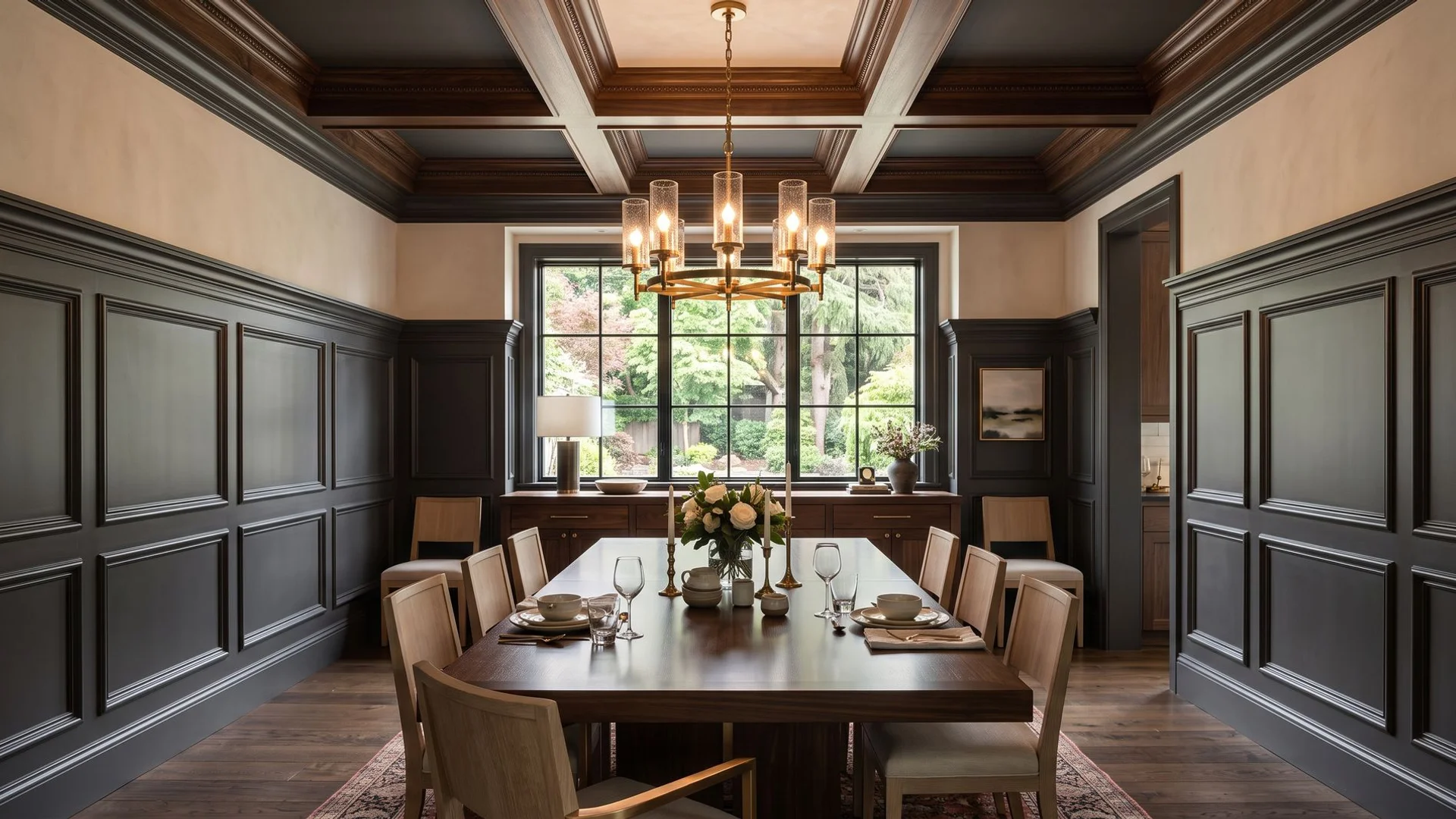
Architectural Custom Millwork & Moulding in Portland
Crown moulding, wainscoting, coffered ceilings, and built-in millwork for residential and commercial settings.
From $4,000 , per project (quoted after consultation)
What Is Architectural Millwork?
Millwork is the trim vocabulary of a house: crown, casing, base, picture rail, wainscot, and the beams and panels that give a ceiling or wall depth. Done well, nobody notices it as a separate element. It simply makes a room feel finished and correctly proportioned. Done badly, or replaced with the wrong profile, it is the first thing that reads as off in an otherwise good renovation.
Portland has an unusual amount of housing stock where this matters. Craftsman, Foursquare, Tudor, and Colonial Revival homes across Irvington, Laurelhurst, Alameda, and the West Hills were built with deep casing, substantial base, and profiles that are no longer stocked anywhere. When part of that trim is lost to a remodel or damage, matching it is a milling problem rather than a shopping problem.
That is where custom knife grinding comes in, and it is one of the reasons Portland homeowners come to us for bespoke cabinetry and architectural millwork rather than to a trim supplier. We take a template off the surviving original, grind a moulder knife to that exact section, and mill new stock in matching species. The new work then takes the same stain and, once installed with coped joints and proper returns, becomes genuinely indistinguishable from the original.
We also design new millwork from scratch: box-beam coffered ceilings, panelled wainscot, library surrounds, and feature walls. Here the work is proportional. Beam depth, panel height, and the relationship between wainscot cap and window stool all have to agree before anything is milled.
Common Problems We Solve
A profile that no longer exists
Every heritage renovation hits this. The closest stock profile is never quite right, and the mismatch is obvious once it is on the wall. A custom knife solves it permanently.
Joints that open after one season
Mitered inside corners open as timber moves. Coped joints do not. It is more labour, and it is why our work still looks tight years later.
Walls that are nowhere near square
Century-old plaster wanders. We scribe on site so the trim follows the wall rather than fighting it, instead of relying on a caulk line that will crack.
Reviews that stall a project
Historic-district compliance is a documentation exercise as much as a craft one. We produce the profile records and specifications reviewers ask for, which keeps the timeline moving.
Which Millwork Suits Your Room?
Crown moulding sets the top edge of a room and should be scaled to the ceiling height; oversized crown in a low room makes it feel lower. Wainscoting protects and defines the lower wall, with board-and-batten reading Craftsman and raised panel reading formal. Coffered ceilings need reasonable height to work, and reward rooms where people linger.
We will tell you honestly when a room does not want a particular treatment. Adding millwork to a space with limited height and short walls rarely improves it, and we would rather redirect the budget to something that will.
Why Choose Us for Millwork?
We hold a C-6 Cabinet, Millwork, and Finish Carpentry license, and historic replication is one of the things we are best known for across the Portland metro. We grind our own knives, finish in the shop, and install with our own crew. That continuity is what makes an exact match achievable rather than aspirational.
How Much Does Millwork Cost?
Millwork is quoted per project by linear footage, profile complexity, and whether custom knives are required.
Single Room Trim Package
$4,000 and up
- Crown, casing, and base for one room
- Stock or lightly modified profiles
- Coped joints and mitered returns
- Primed or finished to match existing
Wainscoting or Coffered Ceiling
$9,000 and up
- Board-and-batten or raised panel wainscoting
- Box-beam coffered ceiling grid
- Plinth and rosette blocks where period-correct
- Site-scribed to out-of-square walls
Historic Replication Package
$15,000 and up
- Custom knife grinding for discontinued profiles
- Species and stain matched to original trim
- Documentation for preservation review
- Whole-floor or whole-home trim programs
Final pricing is confirmed after an in-home, on-site, or showroom consultation, because species, finish, hardware, and scope all move the number.
Why Choose Us for Millwork
Exact historic replication
We grind custom moulder knives to reproduce discontinued profiles, which is the only reliable way to match heritage trim precisely.
Preservation documentation
Drawings, profile records, and material specifications prepared for Portland Historic Landmarks Commission and HOA reviews.
Coped, not caulked
Inside corners are coped and outside corners mitered with returns, so joints stay tight as the house moves through the seasons.
Species and stain matching
We test panels against surviving original trim in your light until the match reads correctly, not just on a sample card.
Whole-room thinking
Crown, casing, base, picture rail, and wainscot heights all relate to each other. We set the proportions before we mill anything.
Residential and commercial
The same millwork capability serves estate homes, boutique retail, and restaurant interiors across the metro.
How Portland Custom Cabinets Compares
| Feature | Typical Provider | Portland Custom Cabinets |
|---|---|---|
| Discontinued profiles | Closest stock match | Custom knife ground to the original |
| Corner joints | Mitered and caulked | Coped inside corners, mitered returns |
| Preservation review | Client's responsibility | Documentation prepared for you |
| Finish | Site painted after install | Shop finished, touched in on site |
| Out-of-square walls | Caulk and filler | Site-scribed to the actual wall line |
Our Millwork Process
Survey & Profile Take-Off
We measure the rooms and take a template off existing trim so new work can match the original exactly.
Design & Documentation
Profiles are drawn, species and finish confirmed, and documentation prepared where a preservation review applies.
Mill & Finish
We grind knives where needed, mill the stock, and finish in the shop so site time stays short.
Install & Scribe
Coped joints, mitered returns, and site scribing so nothing shows a gap on a wall that is not straight.
Thinking about millwork?
Book a complimentary consultation and see the room rendered before anything is cut.
Millwork Projects
What Clients Say About Our Millwork
They matched the historic millwork in our Irvington home so exactly that the preservation reviewer couldn't tell the new work from the original. Flawless craftsmanship.
The coffered ceiling completely changed the room. The proportions are exactly right, which is apparently harder than it looks.
Every joint is tight, and two winters later they still are. That tells you everything about how it was installed.
Millwork FAQs
Can you replicate a moulding profile that is no longer manufactured?
Yes. We take a template off the original, grind a custom moulder knife to that exact profile, and mill new stock in matching species. For historic Portland homes this is usually the only way to achieve a true match rather than an approximation.
Do you handle historic district reviews?
We prepare the drawings, profile documentation, and material specifications a review requires, and we have done so for projects in Irvington, Laurelhurst, and Ladd's Addition. Your architect or contractor files the application; we supply the millwork evidence behind it.
How much does custom millwork cost?
Millwork is quoted per project based on linear footage, profile complexity, species, and whether custom knives are needed. A single-room trim package starts in the low four figures; whole-home historic replication programs run considerably higher.
What is the difference between board-and-batten and raised panel wainscoting?
Board-and-batten uses flat stiles applied over a panel field for a simpler, Craftsman-appropriate look. Raised panel uses a profiled panel set within a frame and reads more formal, suiting Colonial and Tudor interiors. We match the choice to the architecture of your home.
What is a coffered ceiling and where does it work?
A coffered ceiling is a grid of recessed panels formed by box beams. It adds depth and shadow to a room with reasonable ceiling height, and it works particularly well in dining rooms, libraries, and formal living rooms.
Can you match the stain on our existing trim?
Yes. We prepare finish test panels and check them against surviving original trim in your own daylight. Old finishes have usually shifted colour over decades, so matching the sample card is not enough.
Do you install, or supply only?
We do both, but we recommend installing what we mill. Coping, scribing, and return details are where a millwork package succeeds or fails, and our own crew knows how the profiles are meant to meet.
Do you do commercial millwork as well?
Yes. Boutique retail, restaurant, and office interiors are a regular part of our work, built to AWI Architectural Woodwork Standards where the specification calls for it.
Still have questions?
Tell us about your space and we will walk you through the options in plain terms.
Request a ConsultationRelated Services
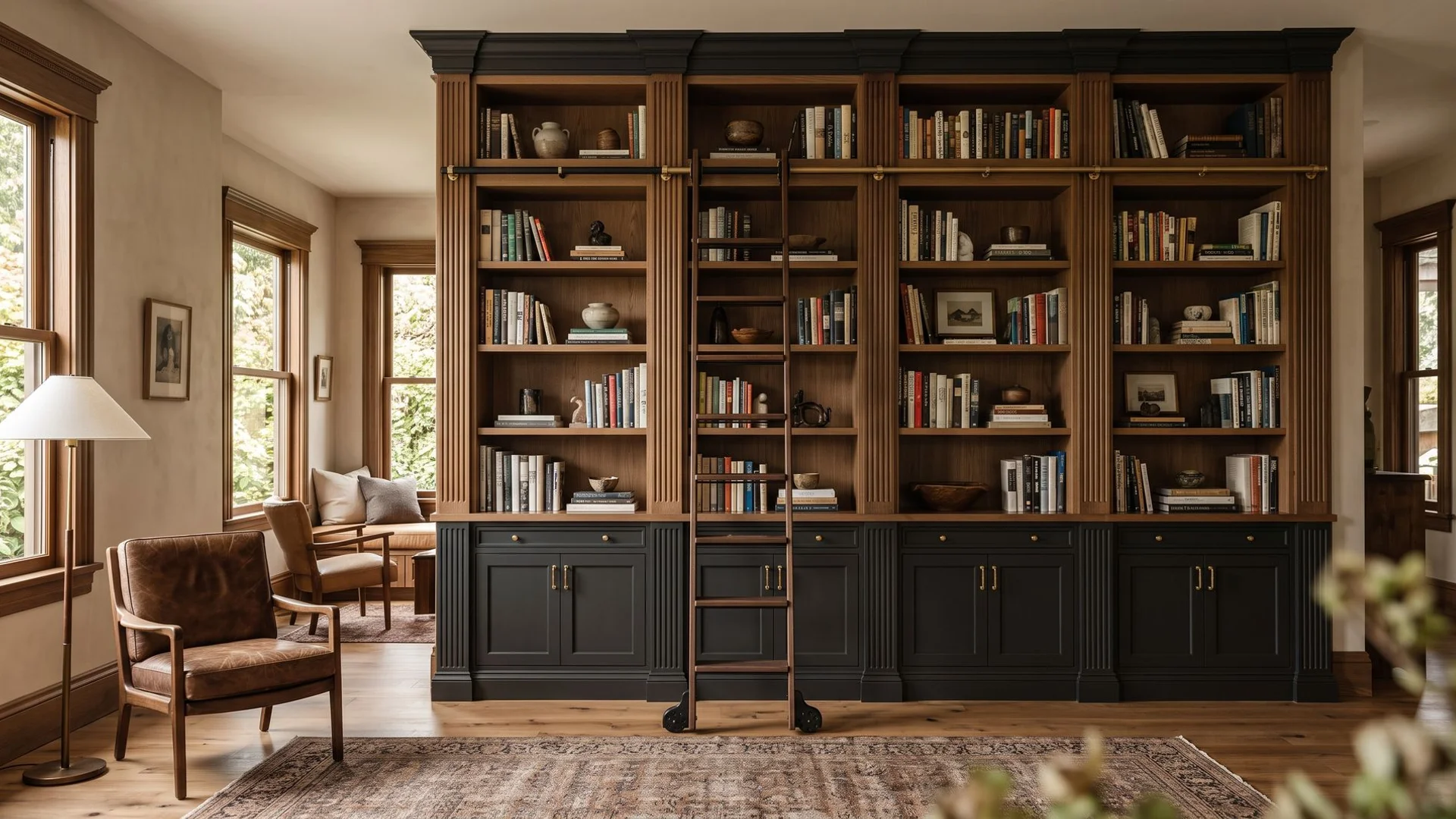
Built-in Furniture & Bookcases
Floor-to-ceiling built-ins, library walls, media consoles, and integrated furniture for uniquely shaped spaces.
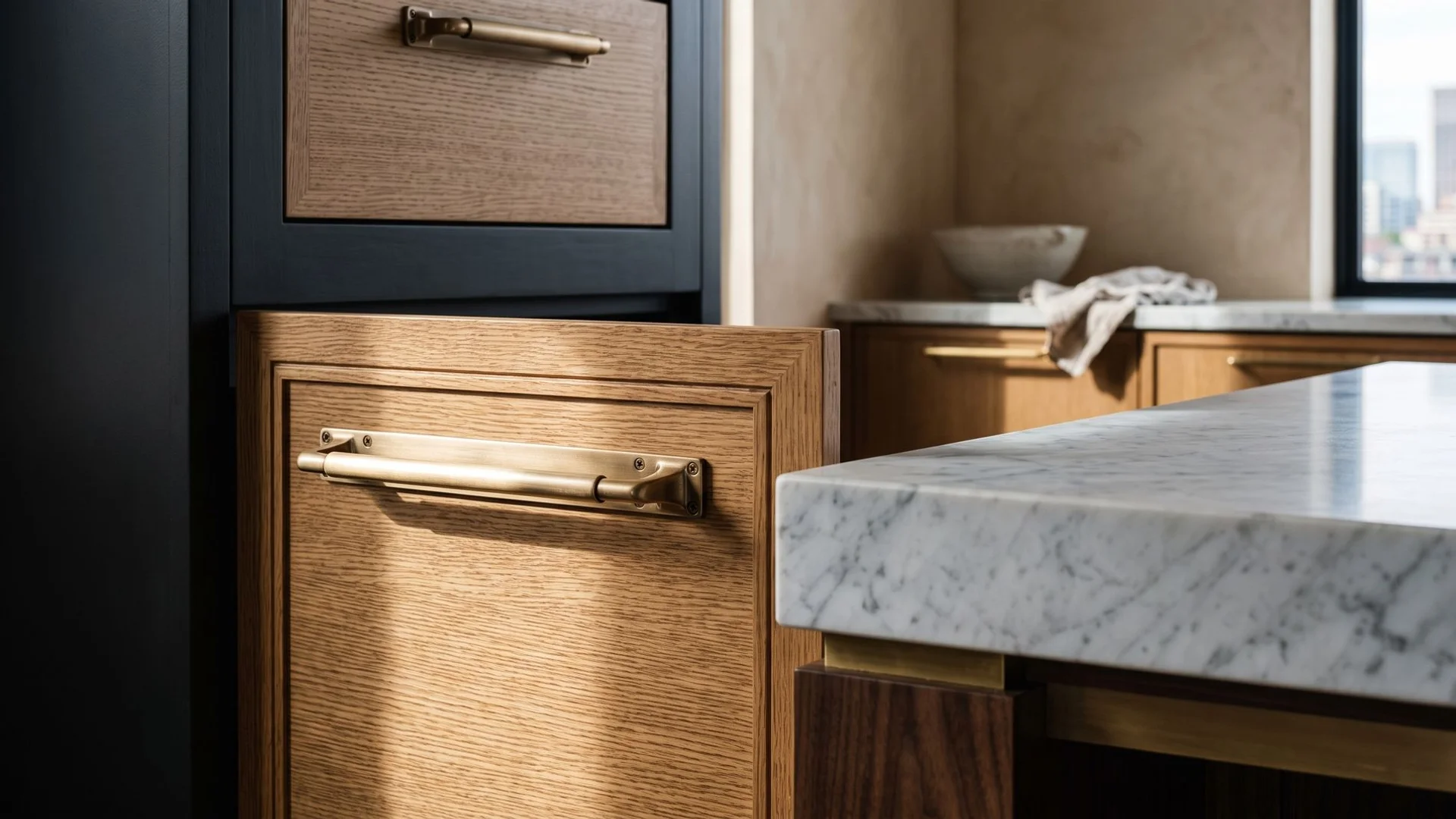
Custom Kitchen Cabinets
Bespoke kitchen designs featuring premium wood selections, precision joinery, and advanced 3D design previews.

3D Design Service
Detailed 3D rendering of layouts, cabinetry, countertops, and finishes before fabrication begins.
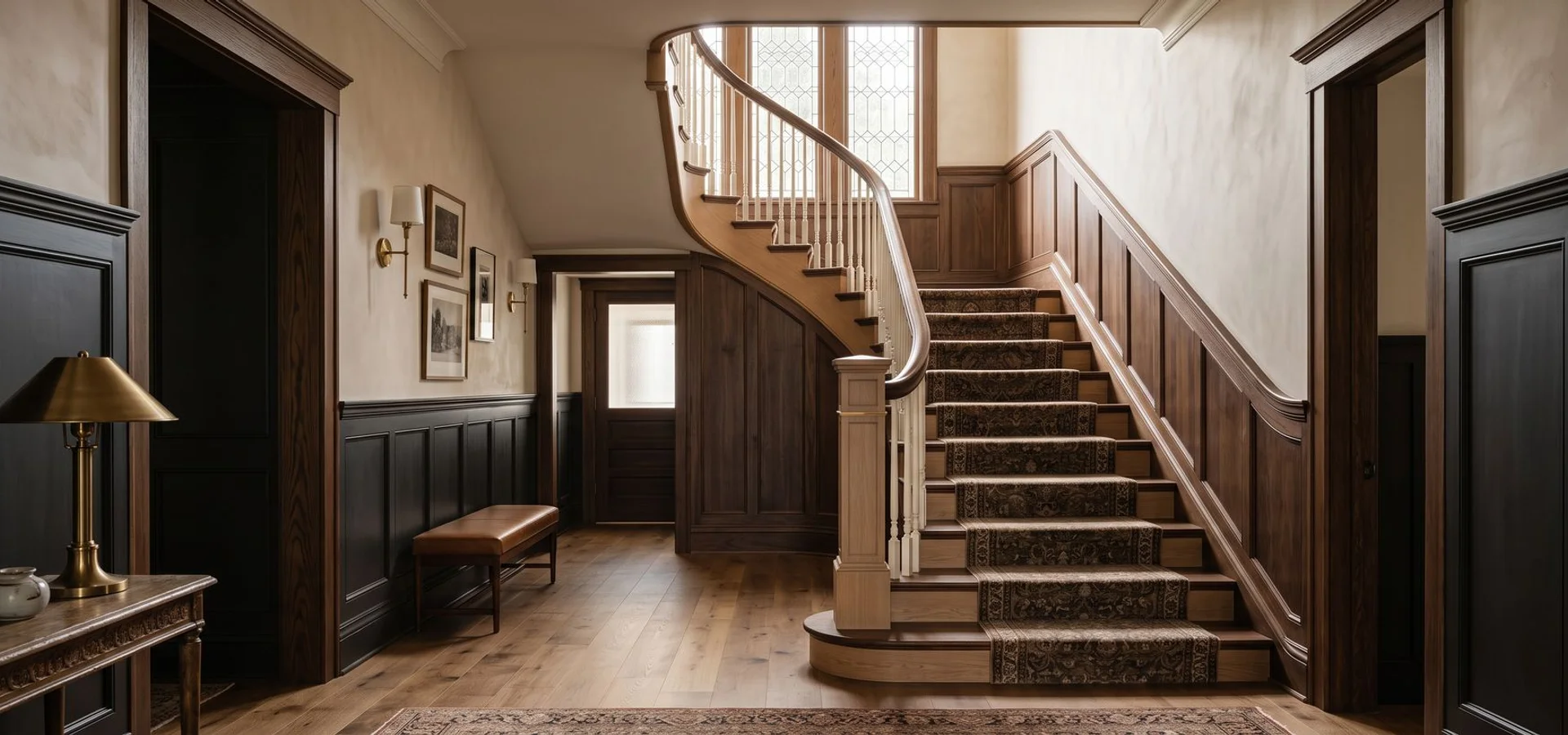
Ready to Plan Your Millwork?
Start with a complimentary consultation and a photorealistic 3D preview of your millwork before fabrication begins.