What Does “Custom” Actually Mean?
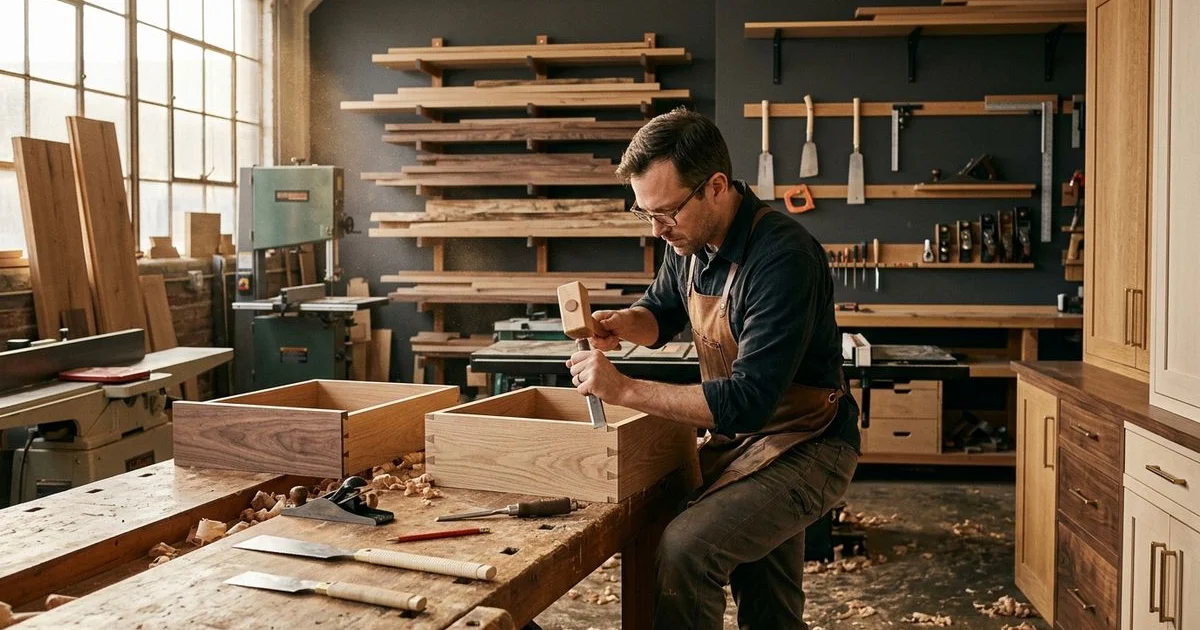
The word gets used loosely. In retail it often means a stock cabinet with a modified width or a different door colour. In our shop it means every component is made for your room: the boxes cut to your measured dimensions, the doors to the style and species you chose, the interiors fitted out for what you actually store.
The clearest way to explain the difference is to walk through what happens between an approved design and an installed kitchen through our Custom Kitchen Cabinets service.
The Box
Everything starts with the carcase. We cut 3/4-inch Baltic birch plywood, a void-free multi-ply panel that holds screws and shelf pins securely and stays dimensionally stable through Portland’s damp winters. Panels are housed into dadoes rather than butted and screwed, which keeps the case square under load and over time.
Backs are captured rather than stapled on, because a properly housed back is what stops a tall cabinet from racking. Interiors are sealed on every face, including the underside of sink bases and the back edges nobody sees, since that is where moisture actually gets in.
The Face and Doors
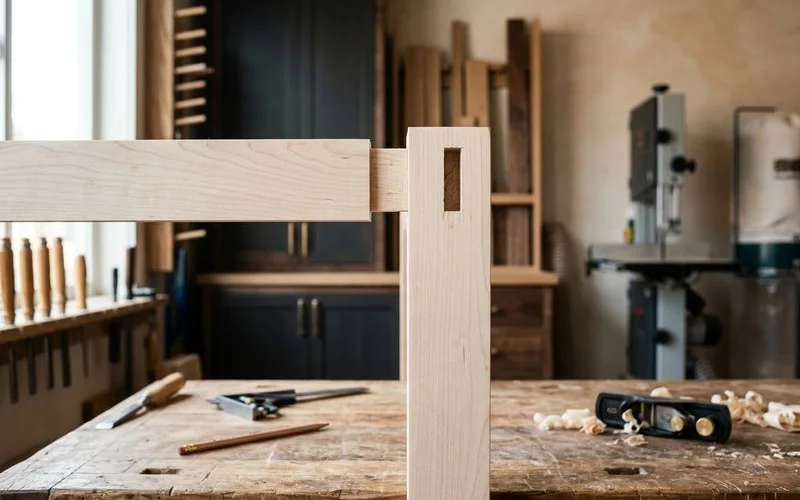
On a framed build, a solid hardwood face frame is joined with mortise-and-tenon or heavy dowels and applied to the front of the case. On a frameless build, the box edge itself is banded and finished, so squareness and material thickness carry more of the load.
Doors are made from solid stock: maple for painted work because its tight grain will not telegraph, rift-cut white oak or walnut where the grain is the point. Rails and stiles are cope-and-stick jointed, and panels in a framed door float within their grooves so seasonal movement does not split them. If you are still deciding between those options, our breakdown of the best wood species for Portland kitchens compares how each one behaves in this climate.
The Drawers
This is where quality shows fastest. Our drawer boxes are solid wood with dovetail joinery, running on Blum undermount soft-close glides. Dovetails resist the racking force of a heavily loaded drawer being yanked open at an angle, which is exactly how drawers get used in real kitchens.
Stapled ply boxes and metal-sided systems work at first. Under a decade of daily use with pans in them, they loosen.
The quality markers worth checking
Box thickness and grade, dovetailed drawers, housed joints rather than butt-and-screw, sealed interiors including hidden faces, and adjustable concealed hinges. If a shop is proud of all five, you are in the right place.
The Fit
The part that cannot be replicated at any price by a production cabinet is the fit. We template the room, and in older Portland homes we find walls that are meaningfully out of square, floors that fall across a run, and ceilings that vary over a few metres.
Every end panel, filler, and crown return is scribed on site to follow those actual lines. That is why a custom kitchen has no visible gaps and no caulk line doing structural work. It is also why installation takes longer than people expect and why we do it with our own crew.
The Finish
Finishing happens in a controlled room before the cabinetry ever reaches your house. Conversion varnish is sprayed and cured under managed conditions, producing a harder, more moisture-resistant film than anything applied on site. Touch-in after install is minimal and matched.
What You Are Really Buying
Exact fit, materials chosen for the climate, joinery that survives daily use, and a finish that holds. Those four things are what separate a kitchen you replace in twelve years from one your buyer specifically mentions when the house eventually sells.